
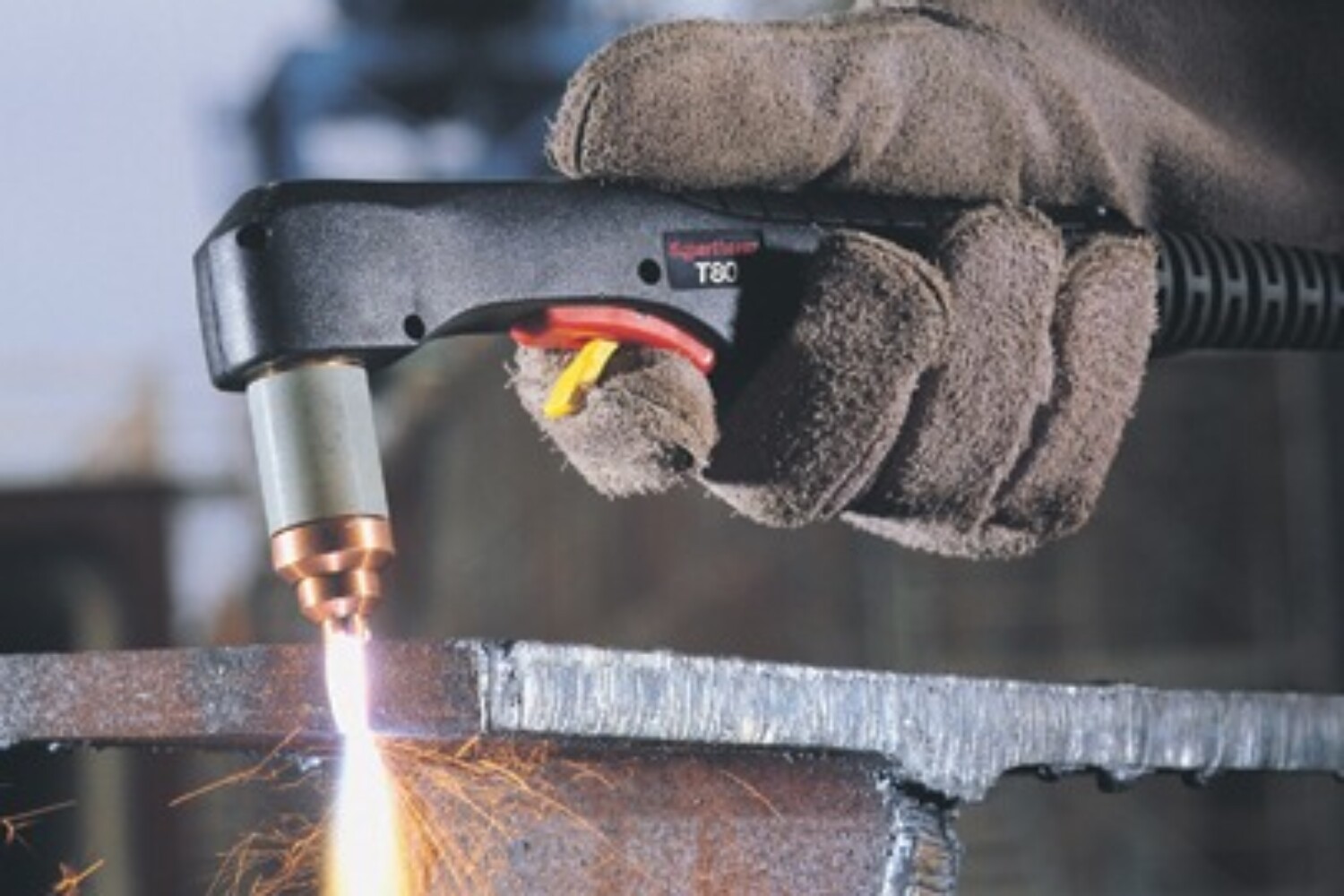
Plasma cutting is one of the most versatile and efficient methods for working with metals of different thicknesses. Thanks to its precision and speed, it has become an indispensable technique in industries such as automotive, construction, and custom parts manufacturing. But, do you know which metals respond best to this technique and what recommendations should you follow to obtain quality cuts?
At Oxiplant, experts in Oxyfuel Cutting, Laser Cutting, and Plasma, we work with a wide variety of materials and know what factors make the difference in achieving perfect results.
Carbon steel: the most common
Carbon steel is one of the most used metals in plasma cutting. Its conductivity and variable thickness allow for clean and precise cuts in structures, industrial parts, and manufacturing projects.
At Oxiplant, we recommend adjusting the machine’s power according to the thickness to avoid burrs. Good speed control ensures a straight cut and reduces the need for subsequent finishing processes.

Stainless steel: precision and care
Stainless steel requires proper configuration, as it is more sensitive to heat than other metals. Plasma cutting allows you to work with this material while maintaining clean edges and without deformations, provided that the correct power is used and the shielding gas is controlled.
At Oxiplant, we have high-definition plasma equipment that allows us to cut stainless steel with a professional-quality finish, minimizing wear and tear and grinding time.
Aluminum: fast and efficient
Aluminum is another of the metals most compatible with plasma cutting, especially in sectors such as automotive or the manufacture of light structures. Its thermal conductivity requires a precise configuration to avoid deformations and maintain the straightness of the part.
At Oxiplant, we use specific techniques to control the temperature during cutting, achieving a uniform finish even on thicker parts.
Copper and conductive metals
Copper, as well as other highly conductive metals, can be cut with plasma, although they require high power and precise current control. This type of cutting is used in electrical components, pipes, and industrial parts where precision is key.
Our team at Oxiplant is prepared to work with high-conductivity metals, using specific configurations to obtain clean edges and reduce material waste.
Cast iron: technique and speed
Cast iron is a material that needs special handling due to its fragility. Plasma cutting is a good option, but it requires adjusting the speed to avoid cracks or breaks in the edges.
At Oxiplant, we apply safety and calibration protocols that allow us to cut cast iron safely, maintaining the integrity of the part and reducing the risk of defects.

Recommendations for a perfect plasma cut
Beyond choosing the right metal, there are certain practices that ensure an impeccable finish:
-
Choosing the correct nozzle: an inadequate nozzle can cause irregular cuts and excessive wear of consumables.
-
Maintaining the correct distance: the height of the torch with respect to the part is crucial to avoid burrs.
-
Controlling the cutting speed: too fast can leave rough edges; too slow, generate excessive heat and deformations.
-
Using the appropriate gas: the combination of gases influences the quality of the cut, especially in metals such as stainless steel or aluminum.
At Oxiplant, we follow each of these recommendations and have state-of-the-art machinery to guarantee precise cuts and professional finishes on all types of metals.
Why trust Oxiplant?
Because we not only work with plasma cutting, but we are also specialists in Oxyfuel Cutting and Laser Cutting, which allows us to offer the ideal technique for each project. At Oxiplant, we combine experience, advanced technology, and a highly qualified team so that each piece has the finish you need.
If you are looking for a company that is an expert in plasma cutting, capable of working with multiple metals and offering maximum precision results, at Oxiplant you will find the perfect partner for your industrial or manufacturing project.